

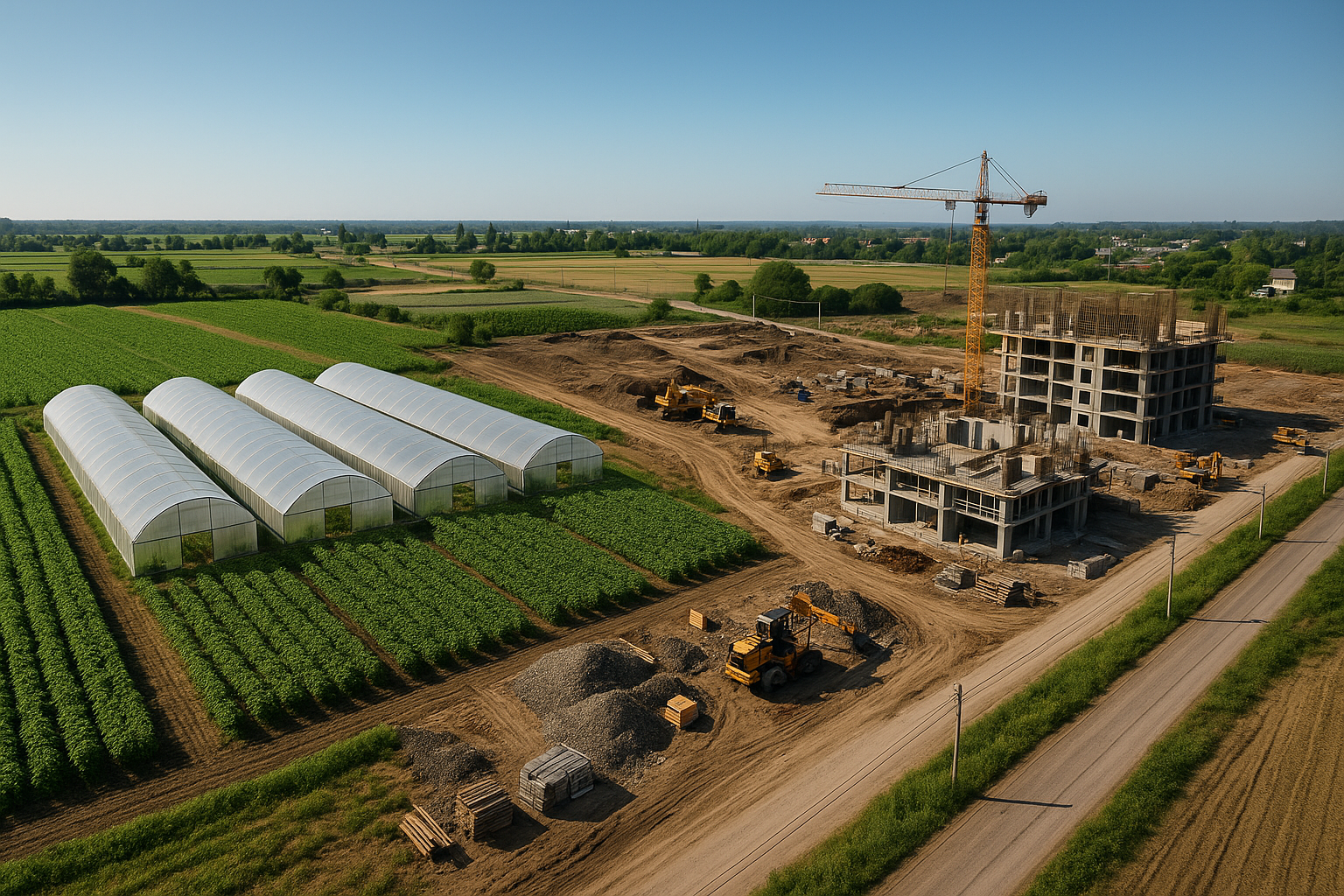
Polypropylene in the agriculture and construction industry is extensively used; from ropes and nets employed in farms and orchards to geotextiles and concrete reinforcement fibers in civil engineering projects, all of which demonstrate the high durability and resistance of this material in diverse environmental conditions. These fibers, with features such as resistance to moisture, chemicals, and mechanical stress, have become an effective substitute for traditional materials in agriculture and civil engineering. In the following sections, we will explore the main applications of polypropylene in these two sectors, its features, advantages and disadvantages, and the future outlook of polypropylene in this industry.
Applications of Polypropylene in Agriculture
Agricultural ropes and twines:
Polypropylene is widely used in the form of ropes or twines for various purposes in farming. Bale twine, commonly used for bundling hay and straw, is often made from polypropylene. These ropes are lightweight, resistant to moisture, and maintain durability under continuous tension. In horticulture, polypropylene is used for tying branches, hanging crops, or creating temporary trellises for climbing plants, commonly known as greenhouse twine. These threads do not rot under greenhouse humidity and heat, and can support the weight of stems and fruits.
Agricultural nets and meshes:
Various types of agricultural meshes are made from polypropylene. For example, shade nets installed above greenhouses or fields to regulate sunlight are often woven from polypropylene. They resist sunlight and moisture and have long service lives. Bird and insect protection nets in orchards are also made of polypropylene, since they are lightweight, rust-free, and easy to install on trellises.
Agricultural packaging:
Packaging and mesh bags for fruits, vegetables, and crops are also often made from polypropylene yarn. Net bags for oranges, potatoes, or onions, which allow ventilation and visibility of contents, are woven from polypropylene. These bags are lightweight, cheap, tear-resistant, more durable, and more hygienic compared to traditional wooden crates or jute sacks.
Irrigation and greenhouse uses:
Polypropylene is also applied in irrigation systems—for example, in suspending drip irrigation pipes or securing fittings. In greenhouses, it is used for tying plants to stakes or building trellises for crops such as cucumbers and tomatoes.
Applications of Polypropylene in Construction and Civil Engineering
Geotextiles:
Geotextiles are specialized fabrics used in civil engineering projects for soil stabilization, drainage, and reinforcement. Woven and nonwoven polypropylene geotextiles play a vital role in roads, railways, dams, and coastal projects due to their excellent soil resistance. Laid under soil or asphalt layers, they evenly distribute loads, prevent local settlement, and extend structural lifespan. In coastal projects, sand-filled polypropylene geotextile bags are used for shoreline protection, as polypropylene remains stable in wet marine environments and resists microbial degradation.
Concrete reinforcement fibers:
Short polypropylene fibers are added to concrete to improve its properties. Typically produced as 1–2 cm thin filaments or mesh, these fibers reduce shrinkage cracks, enhance tensile, flexural, and abrasion resistance. During fire exposure, the fibers melt at around 160 °C, creating vapor escape channels that help prevent explosive spalling. Polypropylene fiber-reinforced concrete is widely used in industrial flooring, tunnels, and structures where durability and crack control are critical.
Composite building materials:
Polypropylene fibers are also used in building composites such as fiber-cement boards, improving toughness and impact resistance. Polypropylene ropes and straps are employed on construction sites for lifting and transporting loads, as they offer high strength-to-weight ratio and weather resistance. Safety nets for scaffolding are also often made from polypropylene or polyethylene, providing lightweight yet strong fall protection.
Drainage and water management:
Drainage pipes and well filters may be wrapped with polypropylene fibers to prevent fine particles from clogging water channels. Because polypropylene resists chemical degradation, it remains intact in soils with acidic or alkaline conditions, functioning effectively as a filter for decades.
Technical Properties of Polypropylene in Agriculture and Construction
- Moisture, mold, and microbial resistance:
Agricultural and soil environments are humid and biologically active. Polypropylene fibers do not absorb water and do not rot, unlike natural fibers. In soil, polypropylene geotextiles remain intact for years since bacteria and fungi cannot digest them. - Resistance to chemicals and fertilizers:
Modern agriculture involves heavy use of fertilizers and pesticides. Polypropylene is resistant to most of these substances, ensuring durability of fertilizer bags, ropes, or packaging. In concrete, polypropylene fibers remain stable against cement alkalinity and last for decades. - High tensile strength and suitable texture:
Polypropylene fibers offer good tensile strength and are easily woven into fabrics and nets. They provide dimensional stability and resist sudden rupture under loads, while their slight elasticity helps absorb shocks from wind or soil pressure. - Lightweight and easy handling:
Polypropylene is very light, enabling workers to easily transport and install nets, geotextiles, and ropes without heavy machinery. This reduces time and execution costs in large-scale projects. - Neutral and non-toxic nature:
Polypropylene is non-toxic and does not release harmful substances into soil or water. Thus, it does not negatively affect crop health or groundwater quality.
Future of Polypropylene in the Agriculture and Construction Industry
- Development of biodegradable products:
With rising concerns about plastic waste, research is ongoing into biodegradable polypropylene or blends with natural polymers. Such products could decompose under sunlight or microbial activity after a few years, creating greener solutions for agricultural plastics. - Increased geotextile use in infrastructure:
As demand grows for durable infrastructure resistant to natural disasters, polypropylene geotextiles will see broader application in dams, roads, and flood control. In Iran, recent years have already witnessed increased use in road construction and flood management, with further investment in domestic production expected. - Expansion of fiber-reinforced concrete:
As fiber addition technologies advance, polypropylene fibers will play a bigger role in high-performance concrete (UHPC) and fire-resistant concrete for tunnels. Hybrid combinations of polypropylene with other fibers are also under research. - Investment in recycling and waste management:
Tighter regulations on agricultural plastic waste are expected, pushing industries toward recycling polypropylene ropes and nets. Technologies for separating polypropylene from soil or organic matter are under development. In construction, recycling of used geotextiles (e.g., during road repairs) will also gain importance.
The applications of polypropylene in the agriculture and construction industry demonstrate its remarkable adaptability to diverse needs. On farms, it assists farmers in crop protection and labor efficiency, while in civil projects it enhances the durability and safety of structures. Despite environmental concerns associated with plastic use, proper management and future innovations can maximize the benefits of polypropylene while minimizing its drawbacks.
Sahand Carpet, as one of the leading producers of polypropylene fibers in Iran, plays a significant role in meeting the demands of both agriculture and construction industries with its high-quality products.